
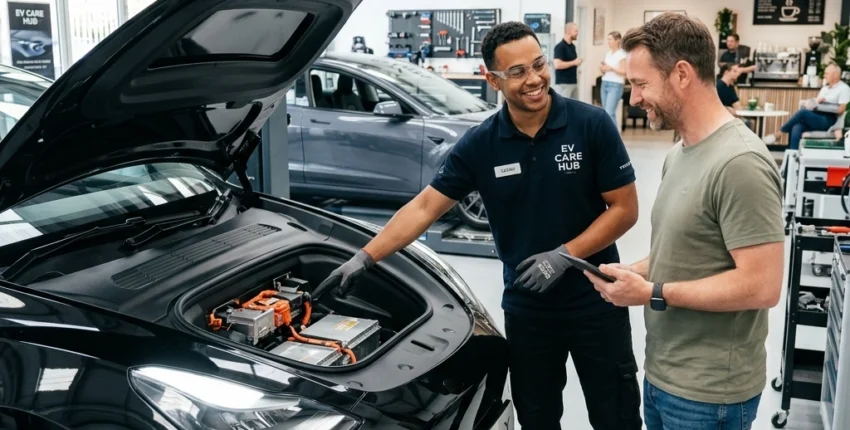
Driving a Tesla through the winding coastal roads of Santa Cruz or commuting over the 17 requires a vehicle that is operating at its peak potential. By 2026, the Tesla fleet has matured, and the technology within these vehicles has become more integrated than ever. While owning a Tesla is often framed as “maintenance-free” compared to internal combustion engines, the reality is that these innovative investments require a specific type of precision and care to avoid costly long-term damage.
At Catalpa Street Garage, we have seen the evolution of the automotive landscape firsthand over our 40+ years of service in the community. As the premier destination for tesla repair in santa cruz, we’ve identified several critical pitfalls that owners face in 2026. Avoiding these mistakes isn’t just about saving money; it’s about protecting the longevity and safety of your vehicle.
1. The “Invisible” Brake Failure: Corrosion and Seizing
One of the most common pitfalls for Tesla owners in 2026 is neglecting the physical braking system. Because Teslas utilize aggressive regenerative braking to recharge the battery, the mechanical friction brakes (the pads and rotors) are often used far less frequently than on a traditional car.
In the salt-heavy air of Santa Cruz, this lack of use is a recipe for disaster. When brake pads sit unused, moisture and salt can cause the pads to seize within the calipers or cause heavy rust to develop on the rotors [2]. We have seen cases where owners require a full brake overhaul: costing upwards of $1,000: simply because the components “froze” from underuse [2].
The Solution:
- Periodic “Brake Cleaning”: Occasionally safely engage in firm braking to clear surface oxidation from the rotors.
- Annual Lubrication: Have an ASE-certified technician perform a brake cleaning and lubrication service once a year, especially if you live near the ocean [2].
- Visual Inspections: Regularly look through your wheel spokes for signs of heavy rust or pitting on the rotors [3].

2. Improper Lifting: The Silent Battery Killer
Tesla’s battery packs are located along the undercarriage of the vehicle, making the chassis incredibly rigid but also vulnerable. A major pitfall in 2026 remains the use of “general” repair shops or roadside assistance teams that aren’t familiar with Tesla’s specific lift points.
Using a standard floor jack without the proper adapter “pucks” or placing a lift in the wrong position can lead to catastrophic damage to the battery casing or the side skirts [2]. This type of damage is often not covered by warranty and can lead to repair bills that total in the tens of thousands.
When searching for a tesla mechanic near me, it is vital to ensure they utilize the specialized equipment required for these unique frames. Our master technicians at Catalpa Street Garage use Tesla-specific lifting protocols to ensure the structural integrity of your battery remains compromised.
3. Ignoring the 2026 Software-Hardware Synergy
By 2026, the connection between a Tesla’s software and its physical hardware has become inseparable. A common pitfall is assuming that an “Over-the-Air” (OTA) update can fix everything. While Tesla is a leader in software, many physical issues: such as failing sensors or camera misalignments: can manifest as software glitches [1].
Inexperienced shops might simply tell you to “wait for the next update,” but our specialty diagnostics allow us to dig deeper. Whether it is a failing Autopilot computer or a degraded ultrasonic sensor, 2026-era tech requires advanced scanning tools that go beyond the basic OBD-II scanners used on older cars.
4. Neglecting Thermal Management Systems
The longevity of your Tesla’s battery is directly tied to its ability to manage heat. In 2026, we are seeing more “coolant heater” and “heat pump” failures in older Model 3 and Model Y units. If the thermal management system isn’t functioning perfectly, your Supercharging speeds will plummet, and your long-term battery health will degrade [2].
Many owners overlook the importance of preconditioning their battery before a fast-charging session. If you plug into a Supercharger with a “cold” battery, the stress on the cells is significantly higher [2].
Best Practice:
Always use the in-car navigation to route to a charging station. This allows the vehicle to begin the thermal preconditioning process, ensuring the battery is at the optimal temperature for energy transfer, which protects the internal chemistry.

5. Coastal Paint Degradation and Body Integrity
Santa Cruz is beautiful, but the environment is harsh on automotive finishes. Tesla is known for having relatively thin paint compared to some European luxury brands [1][4]. By 2026, many owners are seeing significant “sandblasting” on the lower rocker panels and wheel arches due to road debris and salt air.
Once the paint is chipped, the aluminum and steel components underneath are vulnerable. To avoid expensive body shop visits, we recommend:
- Mud Flaps: A small investment that prevents high-speed debris from stripping the paint off your doors.
- Paint Protection Film (PPF): Specifically for the front bumper and hood to prevent rock chips.
- Ceramic Coating: Provides a hydrophobic layer that makes it harder for salt air to “stick” to the vehicle.
For more information on why we focus on precision care for modern vehicles, you can read about our 40 years of expert auto repair in Santa Cruz.
6. Cabin Environment and Filter Neglect
A pitfall that affects your health as much as the car’s is the neglect of the HEPA and cabin air filters. Teslas with “Bioweapon Defense Mode” have incredibly sophisticated air filtration systems, but these filters are not permanent. In our humid coastal climate, an old filter can become a breeding ground for mold and mildew, leading to a “musty sock” smell every time you turn on the AC [2].

Why Specialized Care Matters in 2026
The “pitfall” that encompasses all others is the belief that any shop can handle an electric vehicle. Tesla’s proprietary systems require a shift in mindset from traditional mechanics. This is why ASE-certified technicians deliver superior electric vehicle repair; they are trained to handle high-voltage systems safely and understand the tight tolerances required for EV suspension and alignment.
At Catalpa Street Garage, we combine “old school” values of transparency and community trust with “new tech” expertise. We don’t just fix cars; we maintain the innovative machines that move our community forward. When you look for tesla repair near me, you aren’t just looking for a wrench; you’re looking for a partner in your vehicle’s longevity.
Summary Checklist for Tesla Owners in 2026:
- Brakes: Have them cleaned and lubed annually to prevent seizing [2].
- Tires: Ensure regular rotations; the high torque of EVs wears tires 20-30% faster than internal combustion cars.
- Lifting: Only use shops with Tesla-specific jack pads.
- Coolant: Have the thermal management system inspected every 2-3 years to ensure the battery remains protected.
- Alignment: Precision alignment is key to maintaining your range and preventing uneven tire wear.
Experience the Catalpa Street Garage Difference
Don’t let a minor maintenance oversight turn into a major repair pitfall. Whether you need a 2026-specific diagnostic check, a brake service, or a thorough inspection before a long road trip, our team is here to provide the specialized care your Tesla deserves.
With over four decades of heritage in Santa Cruz, we pride ourselves on providing dealership-level technology with the personal touch of a local family-owned business. Protect your investment and enjoy the peace of mind that comes with professional, ASE-certified expertise.
Ready to ensure your Tesla is road-ready? Contact us today to schedule your specialized diagnostic or maintenance appointment.