
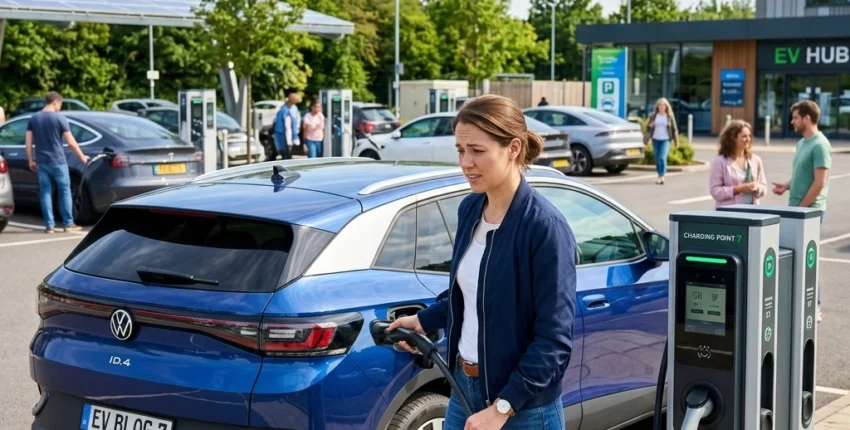
Driving along West Cliff Drive or navigating the winding turns of Highway 1, it is easy to see why Santa Cruz has become a hub for electric vehicle (EV) enthusiasts. The silent torque, the environmental benefits, and the sheer innovation of these machines make them a perfect fit for our coastal lifestyle. However, as these vehicles transition from “new technology” to “daily drivers” in 2026, many owners are unknowingly falling into habits that compromise their vehicle’s longevity and performance.
At Catalpa Street Garage, we’ve seen how these “finely tuned machines” react to improper care. Transitioning from an internal combustion engine to an EV requires a shift in mindset. It isn’t just about swapping gas for electricity; it’s about managing a sophisticated electrical ecosystem. To help you protect your investment, we’ve identified the seven most common mistakes EV owners make and how to fix them.
1. Living in the “100% Habit”
The most common mistake EV owners make is treating their car battery like a fuel tank: filling it to the brim every single night. While it is tempting to see that “100%” on your dashboard, lithium-ion batteries are under the most chemical stress when they are at the extreme ends of their capacity (either completely full or nearly empty).
For daily driving around Santa Cruz, keeping your battery between 30% and 80% is the “sweet spot” for longevity. Frequently pushing the battery to 100% can accelerate cell degradation, leading to a noticeable drop in range over a few years. Most modern EVs allow you to set a charging limit; we recommend capping it at 80% unless you are preparing for a long-distance road trip.
2. Neglecting Software Updates
In 2026, your car is essentially a computer on wheels. Manufacturers frequently release “Over-the-Air” (OTA) updates that do more than just change the look of your touchscreen; they often include critical improvements to thermal management, regenerative braking algorithms, and battery safety protocols.

Ignoring these updates or delaying them can leave your vehicle running on inefficient or outdated logic. For those requiring more specialized attention, especially when an update fails or causes a system glitch, searching for tesla repair santa cruz will lead you to experts who understand proprietary software hurdles. At Catalpa Street Garage, we utilize specialized diagnostic equipment to ensure your vehicle’s “brain” is communicating perfectly with its “body.”
3. Over-Relying on DC Fast Charging
The convenience of a 30-minute rapid charge is undeniable, but it comes at a thermal cost. DC Fast Charging (Level 3) pumps a high volume of current into the battery very quickly, which generates significant heat. While the vehicle’s cooling system works hard to manage this, consistent use of fast chargers can lead to faster battery aging compared to Level 2 home charging.
Think of DC fast charging as a “emergency tool” or a “road trip necessity” rather than a daily solution. Whenever possible, rely on the slower, steadier Level 2 charging. Your battery: and your long-term resale value: will thank you.
4. The “Extension Cord Roulette”
We still see owners attempting to charge their vehicles using standard orange household extension cords. This is a significant safety hazard. Most household extension cords are not rated for the sustained, high-amperage draw required by an EV charger over several hours.
Using an undersized cord can lead to:
- Voltage drops: Reducing charging efficiency.
- Heat buildup: Potentially melting the cord or damaging your home’s electrical outlet.
- Fire risks: Sustained heat is a leading cause of electrical fires in residential garages.
If you are looking for an ev mechanic near me to inspect your charging setup or explain why your vehicle isn’t pulling the power it should, we are here to help. Always use a dedicated, high-quality Level 2 charging station installed by a professional.
5. Ignoring Preconditioning Features
One of the most underutilized features in modern EVs is thermal preconditioning. Your battery operates most efficiently within a specific temperature range. In the cooler mornings of a Santa Cruz winter, a “cold” battery is less efficient and cannot accept regenerative braking energy as effectively.
By using your vehicle’s app to “precondition” or “schedule” your departure, the car uses grid power (while plugged in) to bring the battery and the cabin to the optimal temperature. This preserves your range for the actual drive and reduces the wear and tear on battery cells caused by operating under thermal stress.

6. Forgetting the “Traditional” Mechanicals
It is a common myth that EVs are maintenance-free. While they don’t need oil changes, they are significantly heavier than their gas-powered counterparts due to the battery pack. This weight puts unique stress on:
- Tires: EVs often require specialized tires with stronger sidewalls and lower rolling resistance.
- Suspension Components: Bushings and shocks work harder to manage the increased mass.
- Brake Fluid: Because regenerative braking does most of the stopping, the physical brakes are used less. However, brake fluid is hygroscopic (it absorbs water), meaning it still needs to be tested and flushed periodically to prevent internal corrosion.
When searching for electric car repair near me, ensure you choose a shop that doesn’t just look at the battery, but understands the mechanical toll that EV weight takes on the entire chassis.
7. Deep Discharging the Battery (The “Limp Mode” Risk)
Just as charging to 100% is stressful, letting your battery sit at 0% or 5% is equally dangerous. If a lithium-ion battery sits at an extremely low state of charge for too long, it can fall below a voltage threshold from which it cannot recover. This is often referred to as “bricking” the battery.
If you return home with a low charge, plug in immediately. Even a standard Level 1 outlet is better than letting the car sit “empty” overnight. Protecting this investment requires maintaining a buffer that keeps the chemistry stable.
Why Specialized Care Matters
The engineering of an EV: especially a Tesla or high-end European electric: involves tight tolerances and proprietary systems that general repair shops may not be equipped to handle. At Catalpa Street Garage, we combine our decades of local heritage with the latest in automotive technology.
We don’t just fix cars; we provide peace of mind. Every service we perform is backed by a nationwide warranty, ensuring that whether you’re driving through the Santa Cruz Mountains or across the country, your vehicle is protected. Our master technicians are trained to handle the specific complexities of EV cooling systems, high-voltage circuits, and specialized tire requirements.
Best Practices for the Santa Cruz EV Owner:
- Check your tires monthly: The instant torque of an EV can wear down tread faster than you’d expect.
- Schedule a “Digital Health Check”: Have an expert scan your vehicle for stored fault codes that may not trigger a dashboard light but could indicate a failing cell or sensor.
- Clean your charging port: Coastal salt air can lead to minor corrosion on contact points; keep them clean and dry.
Experience the Difference
Your electric vehicle is an innovative investment in the future. Don’t trust it to someone who is “still learning” the ropes of electric car repair. Choose a team with the specialized diagnostics and the professional credentials to keep you on the road safely.
If you’ve noticed a drop in range, an unusual noise in your suspension, or simply want to ensure your EV is ready for the years ahead, we invite you to visit us. From Santa Cruz to the surrounding communities, we are your trusted partners in the evolution of automotive care.
Contact us today to schedule a comprehensive EV health inspection.